
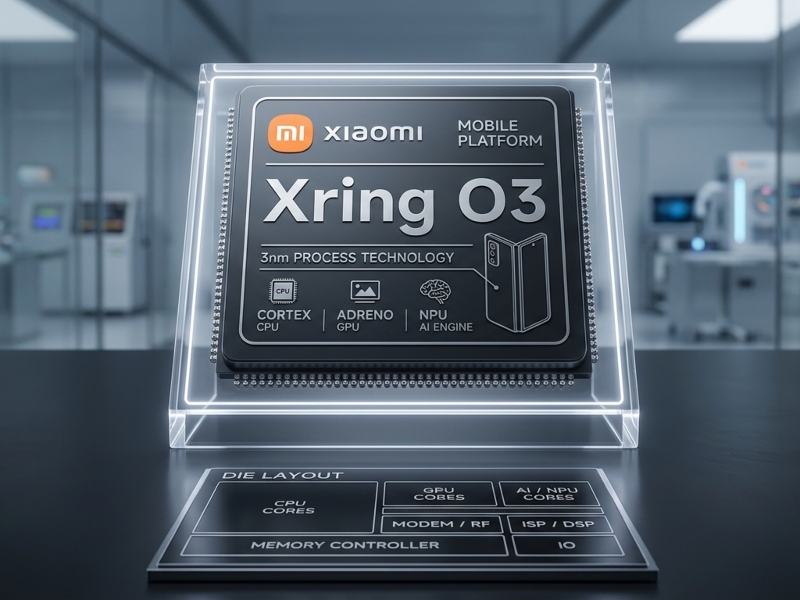
Xiaomi XRing O3 3nm processor debuts in foldable phone
Xiaomi has unveiled its latest in-house smartphone processor, the XRing O3, as part of a broader push to develop its own chip technology. The 3-nanometre chip is expected to debut in September in the company’s upcoming foldable smartphone, the Xiaomi 18 Fold, marking a significant step in reducing its dependence on external suppliers such as Qualcomm and MediaTek.
The XRing O3 is manufactured by TSMC using its 3-nanometre production process, one of the most advanced manufacturing technologies currently available. The processor packs 24 billion transistors into a 133 square millimetre die, up from 19 billion in its predecessor, the XRing O1, which launched about a year earlier.
The new chip will feature a 10-core CPU and a 16-core GPU, with Xiaomi claiming a 60% improvement in CPU performance and an 85% boost in graphics. It also includes a neural processing unit (NPU) for on-device artificial intelligence tasks, delivering up to 200 trillion operations per second. The XRing O3 is the world’s first mobile processor to support LPDDR6 memory, a faster type of memory that handles data more quickly than previous generations.
This chip launch comes as Xiaomi has reportedly spent more than 20 billion yuan (approximately $3 billion) on chip development and grown its semiconductor workforce to over 3,000 employees. Founder Lei Jun has confirmed that the company plans to invest at least 50 billion yuan ($7 billion) over a decade. The initial shipment target for the XRing O3 is between 200,000 and 300,000 units, suggesting a measured approach rather than an immediate full-scale replacement for externally sourced processors.
The move reflects a broader industry trend among consumer electronics companies seeking to control critical components. By designing their own chips, manufacturers can tailor hardware to their specific software and device designs, rather than relying on suppliers. This is particularly relevant as competition in the premium smartphone segment intensifies and devices increasingly need to handle complex AI workloads.
Xiaomi is extending its semiconductor ambitions beyond smartphones. The company also introduced the XRing O100, a 6-nanometre AI accelerator for its large-language models, and the XRing D100, a 3-nanometre chip for autonomous driving applications. Both are expected to enter commercial deployment in 2027. This broad strategy aligns with Xiaomi’s ecosystem of smartphones, electric vehicles and smart-home products.
The XRing O3’s limited production volumes mean Xiaomi will continue to rely heavily on Qualcomm and MediaTek across most of its smartphone lineup. However, developing its own chips gives the company valuable leverage in negotiations with suppliers and provides a point of differentiation for its flagship products. For consumers, the chip could translate into better hardware-software integration, more efficient power management and improved AI capabilities.
Xiaomi’s chip push faces challenges, including weak consumer demand in China and intense competition across its businesses. The significant upfront costs of semiconductor development also carry financial risk. Nevertheless, the company’s long-term commitment to in-house chip development represents a strategic bet on greater technological independence and product differentiation. The XRing O3’s debut as a premium foldable smartphone will provide an early test of whether Xiaomi’s silicon ambitions can deliver tangible benefits for consumers.
This article covers Xiaomi’s XRing O3 chip launch, its technical specifications, the strategic reasons behind the company’s push into semiconductor development and the broader implications for the company and the smartphone market. The move illustrates how major consumer electronics companies are attempting to control critical component technology as part of their long-term strategy.