
China’s Humanoid Robots Move from Showcases to Factory Floors
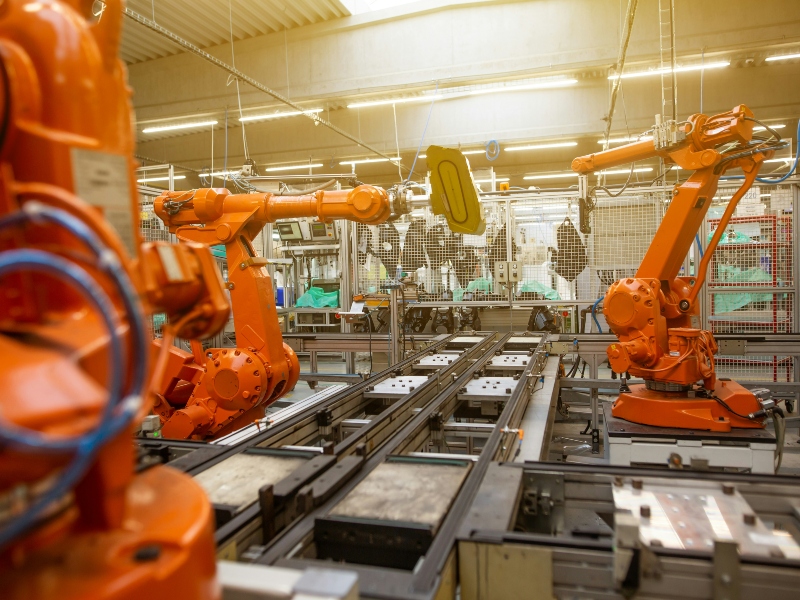
At the 2026 World Robot Conference in Beijing, visitors saw something different from previous years. Robots were no longer just performing flashy tricks. Instead, they were sorting packages, stacking boxes, and handling assembly line tasks in simulated factory setups. The shift reflects a broader change in China’s robotics industry, which is now pushing hard to move humanoid robots and AI systems from exhibition halls into real production environments.
The numbers help explain why this matters. China’s robotics sector revenue will exceed 300 billion yuan in 2025, with average annual growth of over 20 percent in the past five years. In the first half of 2026 alone, revenue reached 165.5 billion yuan, up 24.5 percent from the previous year. Nearly 10 major automakers, including BYD and SAIC, are already testing embodied intelligence systems on their production lines for tasks like material handling and parts loading.
This is not just about flashy technology. China’s advantage lies in its existing manufacturing ecosystem and hardware production capacity. The country will account for more than half of the world’s newly installed industrial robots in 2024, surpassing Japan, the United States, and South Korea combined. This scale creates a foundation that other countries cannot easily replicate.
What changed in 2025 was the shift from “demonstration” to “deployment.” Early in the year, humanoid robots were still drawing crowds for their ability to perform stunts like backflips. By the end of the year, the conversation had turned to whether these machines could work an eight-hour shift on a production line. The industry moved from asking “what can it do?” to “can it deliver value consistently?”
For factory managers, the practical applications are becoming clear. Robots are evolving from simple mechanical arms into AI-enabled systems that can perceive their environment and make decisions. This matters because manufacturing has many tasks that are repetitive but require flexibility, such as quality inspection, sorting items of different shapes and sizes, and handling materials in tight spaces.
A report by the China Academy of Information and Communications Technology shows that China had built more than 70 embodied intelligence training grounds as of June 2026, with 46 more under construction or being planned. These facilities allow robots to learn and improve their performance in controlled environments before being deployed in factories.
The government has given this effort clear support. Embodied intelligence was first written into China’s government work report in 2025, and the 15th Five-Year Plan (2026-2030) calls for forward-looking investment in future industries including embodied artificial intelligence. This policy backing provision provides confidence for companies to make long-term investments.
For manufacturers in emerging markets, these developments are directly relevant. The technologies being deployed in Chinese factories are not science fiction. They are practical tools for improving quality control, reducing waste, and increasing consistency in production. AI-powered computer vision for defect detection, for example, can inspect products faster and more accurately than human workers. Autonomous robots for material handling can work around the clock without breaks.
The implications extend beyond China. Asian Infrastructure Investment Bank President Jin Liqun noted in October 2025 that AI and robotics could bring manufacturing back to developed countries by reducing labor cost advantages that emerging markets have historically relied on. For manufacturers in countries like Pakistan, this presents both a challenge and an opportunity. Pakistani robotics firm Robionix has called for joint laboratories and joint ventures with China to help close the gap in precision component manufacturing.
Chinese suppliers are potential partners in this effort. China’s production base for motors, reducers, and controllers makes it a logical source for components that emerging markets cannot yet produce locally. The key is moving from simply buying finished products to building local capacity for integration, maintenance, and eventually manufacturing.
Unitree Robotics, which became the first humanoid robot maker listed on China’s A-share market in August 2026, expects that a “ChatGPT moment” for embodied intelligence could come within two to three years under an optimistic scenario. That breakthrough would occur when robots can be dropped into unfamiliar settings and complete most tasks via simple voice or text commands.
For companies considering investments in automation, the practical advice is straightforward. Start with specific, repetitive tasks where current labor costs or quality issues create clear returns. Machine vision for quality inspection often provides the fastest payback, followed by material handling and packaging automation. Technology is available today, and the costs continue to decline as production scales up.
The factories of the future are not coming. They are being built now, one assembly line at a time.