Best Energy-Efficient Inverter AC for Pakistan Homes
Buying an air conditioner in Pakistan is no longer just about choosing a well-known brand or the lowest price. With long and intense summers, particularly in Punjab and cities such as Lahore, Faisalabad and Multan, an AC can become one of the largest electricity-consuming appliances in a home. The right model, capacity and installation can make a noticeable difference to both comfort and monthly electricity bills.
Pakistan now has its own system for helping consumers compare the energy performance of air conditioners. The National Energy Efficiency and Conservation Authority, or NEECA, regulates the Pakistan Energy Label for eligible room air conditioners. The label can show important information including cooling capacity, annual electricity consumption, CSPF rating, star level, compressor type and refrigerant. The system uses star ratings from 1 to 5, with a higher rating indicating better energy efficiency. Buyers should therefore check the official label rather than relying only on advertising claims made on a showroom display.
Understanding CSPF and the Pakistan Energy Label:
One important term for Pakistani AC buyers is CSPF, or Cooling Seasonal Performance Factor. In simple terms, it measures how efficiently an air conditioner provides cooling over a season. Pakistan’s air-conditioner testing framework uses PS ISO 16358-1 for cooling seasonal performance. Generally, when comparing similar ACs, a higher CSPF indicates better seasonal energy efficiency.
This is more useful for a local buyer than simply looking at an international SEER or SEER2 figure found in online articles from the United States. Those ratings are based on different testing and regulatory systems. In Pakistan, the first place to look should be the Pakistan Energy Label and the information printed for the exact model being purchased.
Buy the right capacity, not simply the biggest AC:
An oversized AC is not automatically a better AC. A unit that is too large for a room may cool it quickly and repeatedly switch or reduce operation, while an undersized unit may struggle for long periods during peak summer heat. Both situations can affect comfort and electricity use.
Pakistani buyers commonly encounter 1-ton, 1.5-ton and 2-ton split ACs, but tonnage should not be selected only by room area. Ceiling height, direct sunlight, the number and size of windows, insulation, the number of people using the room and local temperatures all matter.
A small, well-insulated bedroom may have very different cooling requirements from a similarly sized top-floor room in Lahore that receives direct afternoon sun. Before buying, ask the seller or installer to assess the actual room and check the cooling capacity of the specific model. For an expensive long-term purchase, a proper load assessment is better than following a simple rule of thumb.
Inverter technology should be the starting point:
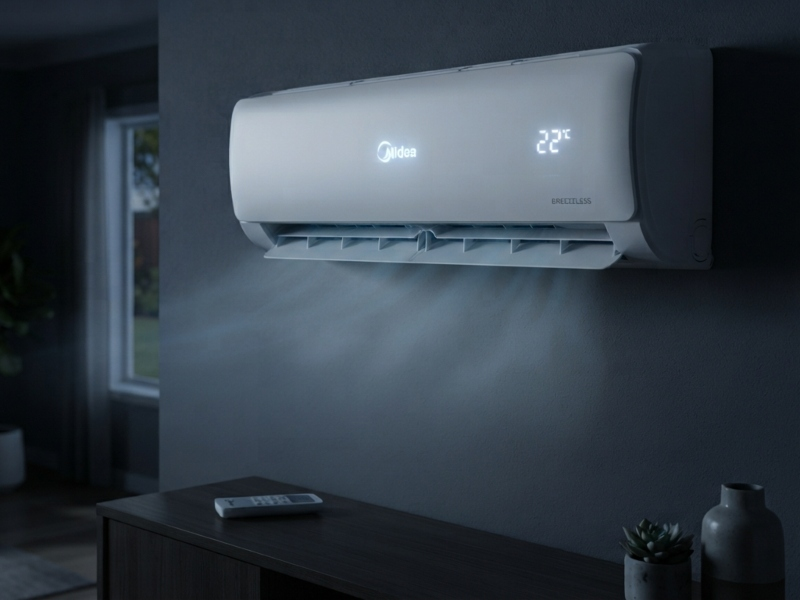
For most households buying a new split AC in Pakistan, an inverter model deserves serious consideration. Unlike a conventional fixed-speed AC that mainly operates by switching the compressor on and off, an inverter AC can vary compressor operation according to the cooling requirement.
This can help maintain a more stable indoor temperature and improve efficiency, especially where the AC operates for many hours. However, the word “inverter” alone does not guarantee that every model has the same electricity consumption. Buyers should still compare the CSPF, star rating, cooling capacity and other specifications of the exact models under consideration.
Pakistan’s market offers a wide range of inverter ACs. Major brands with established AC ranges include Haier Pakistan, Dawlance, Gree, Orient, TCL and Kenwood. Haier, for example, currently lists several T3 Plus Inverter and solar-hybrid models in Pakistan. A T3 model may be particularly worth examining in areas with very high summer temperatures, but buyers should compare the exact model specifications and energy label rather than choosing based on a series name alone.
Installation can affect real performance:
A good AC can perform poorly if it is incorrectly installed. The indoor and outdoor units need suitable placement, refrigerant work must be properly completed, electrical connections should be safe and the system should have adequate airflow.
This matters particularly in Lahore and other congested urban areas, where outdoor units are sometimes placed in poorly ventilated balconies or enclosed spaces. Restricted airflow around the outdoor unit can affect its ability to release heat.
Consumers should use a qualified installer and ask whether the work includes proper piping, insulation, drainage and testing. A lower purchase price can become expensive if poor installation leads to inefficient operation or repeated maintenance problems.
Check the electricity requirement before buying:
Before selecting an AC, look beyond the purchase price. Compare the information on the Pakistan Energy Label, including annual electricity consumption and CSPF, where available. NEECA requires manufacturers, assemblers and importers of covered wall-mounted split room ACs up to 10.5 kW to obtain the Pakistan Energy Label before sale, and the label is intended to help consumers compare efficiency.
Also consider how many hours the AC will operate. A more efficient model may make greater financial sense for a family that uses air conditioning daily throughout a long summer than for someone who only runs an AC occasionally.
Maintenance and daily use also matter:
An energy-efficient AC cannot remain efficient if basic maintenance is ignored. Filters should be cleaned regularly according to the manufacturer’s instructions because dust can restrict airflow. The outdoor unit should be kept reasonably clear, and professional servicing may be needed if cooling performance declines.
Avoid setting the thermostat unnecessarily low. In Pakistan’s extreme summer heat, the difference between outdoor and indoor temperatures can be substantial. Choosing a sensible, comfortable temperature instead of forcing the AC to maintain an excessively cold room can reduce the cooling load.
Ceiling fans can also help improve comfort by circulating air. This may allow occupants to remain comfortable at a somewhat higher AC setting, depending on room conditions and personal preference.
The practical choice for Pakistani homes:
The best energy-efficient AC in Pakistan is not necessarily the most expensive model or the one with the biggest discount. For most buyers, the sensible approach is to choose the correct capacity, prefer a good inverter model, compare the Pakistan Energy Label and CSPF of the exact models, and ensure professional installation.
With electricity costs remaining an important household expense, an AC should be treated as a long-term operating decision rather than a one-time purchase. Spending time comparing efficiency before buying can be more valuable than focusing only on the initial price. A properly sized and efficiently rated inverter AC, installed and maintained correctly, gives Pakistani households a better chance of staying comfortable through the summer without paying for unnecessary electricity consumption.