Contract Manufacturing – How to Launch Your Own Food Brand
You do not need to build a food factory to launch your own food brand in Pakistan. From sauces and spices to snacks, bakery products, beverages and ready-to-eat foods, entrepreneurs can work with contract manufacturers that produce and package products under their brand name.
This model can significantly reduce the capital required to enter the food business. Instead of investing in industrial machinery, production premises, quality-control facilities and a large workforce, the brand owner can concentrate on product development, packaging, marketing, distribution and sales.
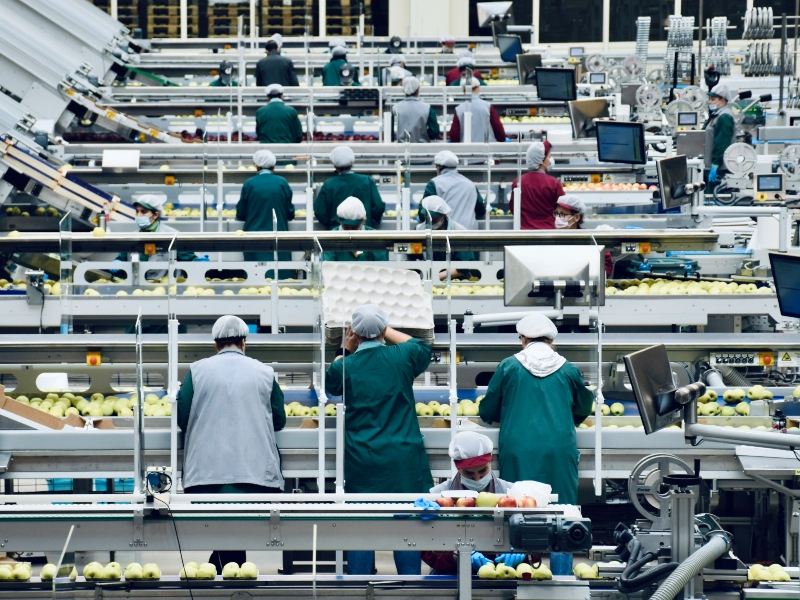
The basic idea is simple: you develop a product or select an existing product that fits your market, while a third-party manufacturer handles some or all of the production process. Depending on the agreement, the manufacturer may also source ingredients, package the product and prepare it for distribution.
Private label and contract manufacturing are closely related but not identical. In private labeling, a manufacturer may already have a product that you can sell under your own brand. Contract manufacturing usually involves producing a product according to your formulation, specifications or requirements. Co-packing is more focused on filling and packaging a product.
For a new Pakistani food business, the most practical model may be a combination of these services. A manufacturer might help develop the product, produce it in batches and pack it in your own branded jars, pouches, bottles or boxes.
The biggest advantage is lower initial investment. Building your own food processing facility involves property, machinery, utilities, food-safety systems, trained employees, storage and regulatory requirements. For a new brand that has not yet proved demand, tying up substantial capital in a factory can be risky.
Contract manufacturing also provides access to equipment and technical knowledge that would otherwise be expensive to establish. But this does not mean the manufacturer takes all responsibility. The brand owner still needs to make sure that the product, labeling, claims, packaging and quality meet the applicable requirements.
Product development is one of the most important stages. A recipe prepared at home may taste excellent but still require changes before it can be manufactured commercially. Mixing, heating, filling, preservation, shelf life and packaging can all behave differently at industrial scale.
A good manufacturer should therefore be able to discuss your formulation, production process, target shelf life, packaging and expected volumes before giving you a final quotation. A small trial or pilot batch is particularly useful before committing to a large production run.
For entrepreneurs in Lahore and Punjab, regulatory requirements also need to be considered from the beginning. The Punjab Food Authority provides procedures for food business licensing and product registration. Its published labeling requirements include items such as manufacturing and expiry dates, batch number, ingredients, net content, nutrition information, allergen information and storage conditions.
Pakistan also has national food standards covering areas such as food labeling, hygiene, packaging and specific food categories through the Pakistan Standards and Quality Control Authority.
This means regulatory compliance should be built into product development rather than treated as something to address after packaging has already been printed.
Choosing the manufacturer requires more than comparing prices. Start by identifying exactly what you want to produce. A snack manufacturer may have no suitable equipment for sauces, while a bakery may not be equipped to manufacture shelf-stable beverages.
Ask potential suppliers about minimum order quantities, production capacity, ingredients, packaging options, testing, shelf life, quality-control procedures, certifications, storage and delivery. Also establish who owns the recipe, artwork, packaging design and other intellectual property.
Several Pakistani companies publicly advertise private-label or contract-manufacturing capabilities. In Lahore, Alisa Foods offers private-label and OEM food manufacturing services, while Nutribel focuses on snacks and co-packing. Milan Foods also advertises private-label food production, including customized production and short-run options.
Other examples include Fameux Foods, which offers private labeling and co-packing, and Ideal Bakers & Foods, which says it produces bakery, sweets and snack products under customers’ brands. These companies should be treated as examples for market research rather than automatic recommendations. Entrepreneurs should independently verify current capacity, certifications, product suitability, pricing and minimum order quantities before signing a contract.
The minimum order quantity, or MOQ, can determine whether a contract manufacturing arrangement makes financial sense. A manufacturer may require a relatively large batch because setting up a production line, cleaning equipment and changing packaging takes time and money. A smaller startup should therefore look for manufacturers willing to handle pilot or small-batch production where available.
Packaging deserves similar attention. The cheapest container is not necessarily the cheapest option after considering breakage, transport, storage, shelf life and presentation. For products intended for modern retail, e-commerce or supermarkets, packaging is also part of the brand experience.
Food safety should remain a priority throughout the process. Ask to see relevant certifications and production documentation rather than relying only on verbal assurances. Pakistan’s food standards framework includes requirements and standards covering areas such as hygiene, prepackaged food labeling, food-contact materials and different categories of processed foods.
There is also a growing range of specialist packaging and processing solutions available to food manufacturers. For example, Tetra Pak promotes Tetra Recart carton packaging for shelf-stable foods such as vegetables, soups and ready meals, showing how packaging technology can become part of the product strategy rather than simply the final production step.
A contract should clearly state who supplies ingredients, who approves the final formula, how rejected batches are handled, what quality standards apply, who owns the product formulation and what happens if production is delayed. It should also establish confidentiality where the recipe or manufacturing process is commercially sensitive.
Pakistan’s market also requires extra care when buying packaging, ingredients and finished products. Counterfeit or substandard materials can enter supply chains, so verify suppliers, documentation, certifications and batch information rather than relying only on price.
For an entrepreneur, the strongest reason to consider contract manufacturing is flexibility. You can test a product, build a customer base and increase production as demand develops without immediately committing to a large factory investment. If the product does not sell, the financial exposure can also be lower than owning a dedicated manufacturing operation.
The model is not a shortcut to building a successful food company. The manufacturer can make the product, but the brand owner still has to create demand, maintain quality, manage distribution and understand the economics of every unit sold.
For Pakistan’s growing small-business and FMCG market, that distinction matters. Contract manufacturing can remove the factory from the list of barriers to entry, but it does not remove the need for a strong product, reliable supply chain and disciplined business model.