
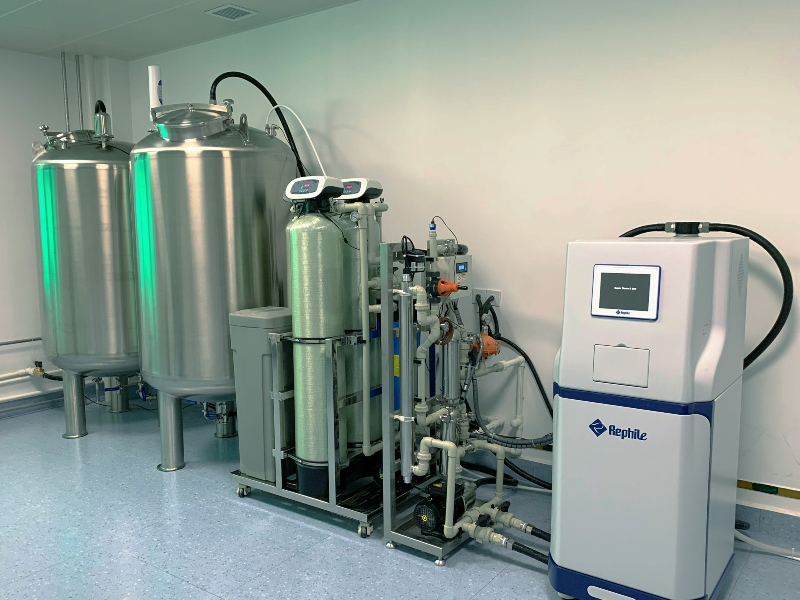
Industrial Water Filtration for Food Factories
Water is one of the most widely used inputs in a food factory, yet it is often treated as a basic utility rather than a production ingredient. In Pakistan, where water quality can vary significantly between cities, industrial areas and water sources, food and beverage manufacturers need to pay close attention to the water entering their production lines.
Water may be used directly in beverages, juices, dairy products and sauces, or indirectly for washing ingredients, cleaning equipment, producing steam, cooling and other processes. Its quality can therefore affect food safety, taste, equipment performance and production costs.
Water quality matters: Food manufacturers should not assume that water that appears clean is suitable for every production application. Dissolved salts, hardness minerals, chlorine, organic matter and microorganisms may not be visible but can affect production.
The Punjab Food Authority has specific standard operating procedures for food businesses, including water plants, and Pakistan’s standards system includes requirements and testing standards relating to food and water quality.
For a factory in Lahore or elsewhere in Punjab, the first step should therefore be testing the actual water source. Municipal supply, bore water and tanker water can have very different characteristics. A treatment system should be selected according to the test results and the intended use of the treated water, rather than simply buying an RO plant based on its advertised capacity.
Food safety is a major reason for treating process water. Water used for washing ingredients, cleaning food-contact surfaces or becoming part of a finished product can introduce microorganisms if it is contaminated. Treatment may include filtration, disinfection with ultraviolet light or ozone, and other processes depending on the source and application.
The treatment process also affects the taste and consistency of food and beverages. Chlorine, dissolved minerals and other substances can alter the taste or odor of products. This is particularly important for bottled water, beverages, juices, dairy products and other products in which water makes up a significant portion of the final product.
Hard water creates another problem: Hardness is mainly associated with calcium and magnesium. When hard water is heated, these minerals can form scale inside boilers, heat exchangers, heaters and pipes. Scale reduces heat-transfer efficiency and can increase maintenance requirements.
Water softeners can reduce hardness before water enters equipment that is particularly sensitive to scaling. For applications requiring a lower level of dissolved salts, reverse osmosis, commonly called RO, can be added.
RO works by pushing water through a semi-permeable membrane that allows water to pass while rejecting a large proportion of dissolved salts and other contaminants. It is widely used in industrial water treatment, but it should not automatically be considered the right solution for every part of a food factory. RO produces a treated-water stream as well as a concentrated reject stream, and its operating cost depends on the source water and system design.
A typical industrial treatment system may combine several technologies: sediment filters remove suspended particles; activated carbon can reduce chlorine, odors and some organic compounds; softeners reduce hardness; RO reduces dissolved salts; and UV or ozone can provide disinfection. The combination should be designed around the factory’s raw-water analysis and production requirements.
Boiler water deserves separate attention. Water used for steam generation may require treatment different from water that becomes an ingredient. Using the same treatment approach for every application can add unnecessary cost or fail to address the actual problem.
Wastewater is another part of the equation. Food factories can generate wastewater containing organic material, suspended solids, oils, cleaning chemicals and other pollutants. Treatment before discharge may be necessary depending on the facility, location and applicable environmental requirements. A factory should therefore consider both incoming process water and outgoing wastewater when designing its water-management system.
There are several suppliers and system integrators serving Pakistan’s industrial market. INTELLI, based in Lahore’s Quaid-e-Azam Industrial Estate, offers commercial and industrial RO systems and food and beverage water-treatment equipment. AquaLine Services provides industrial water-treatment equipment and services in Pakistan, including RO plants and boiler and cooling-water treatment for food and beverage manufacturers. PK Water Technologies also offers industrial RO plants and related treatment systems for food and beverage and other industries.
For membrane components, established international names such as DuPont FilmTec, Toray, Hydranautics, Pentair and Koch are used in industrial treatment systems available through Pakistani suppliers. Nectar Water Filter, for example, lists these manufacturers among the membrane brands used in its industrial solutions.
The important point for a factory owner is not simply choosing a famous brand. Capacity, membrane selection, pretreatment, water recovery, automation, testing, spare-parts availability and after-sales service can have as much impact on long-term performance as the name on the equipment.
Pakistan’s market also contains imported, refurbished and imitation filtration components, so buyers should verify the supplier, component authenticity, warranty and test documentation before installing a system in a production facility.
A well-designed water-treatment system is ultimately part of production quality, not just a plumbing expense. For a food factory, the right approach is to test the source water, identify where treated water is required, establish the required quality for each application, and then design filtration and treatment around those needs. This can protect the product, equipment and production process while helping the manufacturer maintain consistent quality as the business grows.