Popular SUVs in Pakistan in 2026 From 1500cc to 2000cc
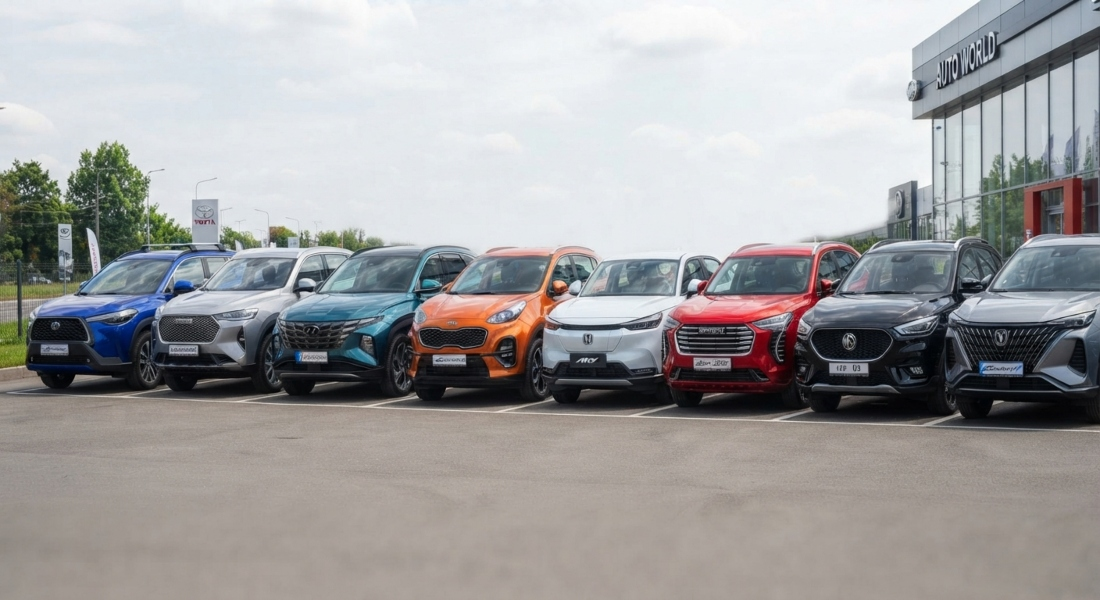
Pakistan’s SUV market has changed significantly, with buyers now having far more choices in the 1,500cc to 2,000cc segment. Toyota Corolla Cross, Haval H6, Hyundai Tucson, Kia Sportage, Honda HR-V, Haval Jolion, MG HS and Changan Oshan X7 are among the better-known choices. They differ considerably in price, size, fuel economy, performance, features and long-term ownership, so there is no single SUV that is best for every buyer.
Toyota Corolla Cross: The Corolla Cross remains one of the safest choices for buyers who place reliability, resale value and fuel economy ahead of maximum features. Its 1.8-liter petrol and hybrid versions give buyers a choice between a lower purchase price and better fuel efficiency. The hybrid is particularly attractive for city driving, where real-world mileage of around 17 to 18 km/L can be achieved under normal conditions. Toyota’s established dealers and parts network is another major advantage. The main weakness is price, especially for hybrids, while its performance and equipment levels may not impress buyers when comparing it with newer Chinese SUVs. Toyota currently lists 1.8 petrol and two hybrid variants in Pakistan.
Haval H6: The H6 has become one of the strongest competitors in this segment because it combines a relatively large cabin with strong performance and extensive equipment. Its 1.5-liter turbo and hybrid versions offer substantially more power than their engine size might suggest. The H6 HEV, for example, produces 240 hp and 530 Nm of combined torque according to Haval Pakistan. It also offers features such as a 14.6-inch infotainment screen, adaptive cruise control, ventilated seats and a 540-degree camera. The downside is that buyers who prioritize proven long-term resale and a decades-old local service ecosystem may still prefer Toyota.
Hyundai Tucson: Tucson has traditionally appealed to buyers wanting a large, comfortable Korean SUV with a conventional ownership proposition. The latest Tucson Hybrid has moved the model into a more competitive position, using a 1.6-liter turbocharged hybrid system with 232 hp combined output. It also offers a relatively large body and a 582-liter minimum luggage capacity. Its disadvantages are its high price and the fact that buyers looking for maximum value and equipment now have several newer alternatives.
Kia Sportage: Sportage has a strong reputation in Pakistan and remains an important name in the SUV market. Its strengths include styling, cabin comfort, established market presence and relatively good resale value compared with many new Chinese brands. Its weakness is increased competition. New SUVs now offer more technology, while hybrid versions of competing models can deliver better fuel economy.
Honda HR-V: The HR-V occupies a slightly different position. It is smaller and easier to handle in crowded cities than the larger H6, Tucson and Sportage. Honda’s reputation for reliability also works in its favor. The trade-off is less cabin space and a less powerful engine than some turbocharged rivals. It is therefore better suited to buyers who value compact dimensions and easy urban driving rather than outright performance.
Haval Jolion: The Jolion is a smaller and more affordable alternative to the H6. Its 1.5-liter turbocharged engine produces 150 hp and 220 Nm, while its equipment list includes several driver-assistance features. It makes a strong case for buyers who want modern features without moving into the larger SUV category. Its main disadvantages are its small market presence and weaker resale confidence compared to Toyota and Honda.
MG HS: The MG HS competes on design, comfort, technology and equipment. The current petrol model uses a 1.5-liter turbocharged engine producing 250 Nm and a seven-speed dual-clutch transmission. MG also offers hybrid versions. Its attractive cabin and technology are clear strengths, but long-term resale and the size of the established service network remain considerations for buyers.
Changan Oshan X7: The Oshan X7 stands out for its space because it can be configured with five or seven seats. Its 1.5-liter turbocharged engine produces 185 hp and 300 Nm and is paired with a seven-speed wet dual-clutch transmission. Its combination of size, power and equipment makes it a good value for families. The disadvantages are fuel consumption that can be higher than a hybrid and less established resale confidence than Toyota or Kia.
Overall, the choice depends on priorities rather than engine size alone. The Corolla Cross is the strongest option for buyers who value fuel economy, reliability and resale. The Haval H6 offers one of the strongest combinations of performance and equipment, while the Tucson and Sportage remain established choices for buyers seeking conventional Korean SUVs. Oshan X7 is particularly attractive for families needing space, while the HR-V and Jolion make more sense for urban users who prefer a smaller crossover. MG HS sits between these groups, emphasizing comfort, technology and design.
The biggest change in Pakistan’s SUV market is that buyers no longer have to choose simply between a 1.8-liter or 2.0-liter petrol engine. Turbocharging and hybrid technology have changed what these vehicles can deliver from relatively small engines. That makes fuel economy, after-sales support, resale value and long-term ownership costs just as important as engine displacement when choosing an SUV.