
Pakistan’s Refinery Problem and the Economic Cost of Fuel Imports
Pakistan’s limited and outdated oil refining capacity remains a major weakness in its energy system and puts continuing pressure on the economy. The country has installed refining capacity of about 450,000 barrels per day, but actual utilization is considerably lower. At the same time, Pakistan continues to rely heavily on imports of refined petroleum products, particularly petrol and diesel, to meet domestic demand.
This dependence has a direct economic cost. Pakistan spends billions of dollars each year importing crude oil and refined petroleum products, making the energy sector an important source of pressure on the country’s foreign exchange position. When international oil prices rise, the impact is quickly transmitted to domestic fuel prices, transport costs, industrial production and inflation. A higher import bill can also increase pressure on the rupee and the country’s external account.
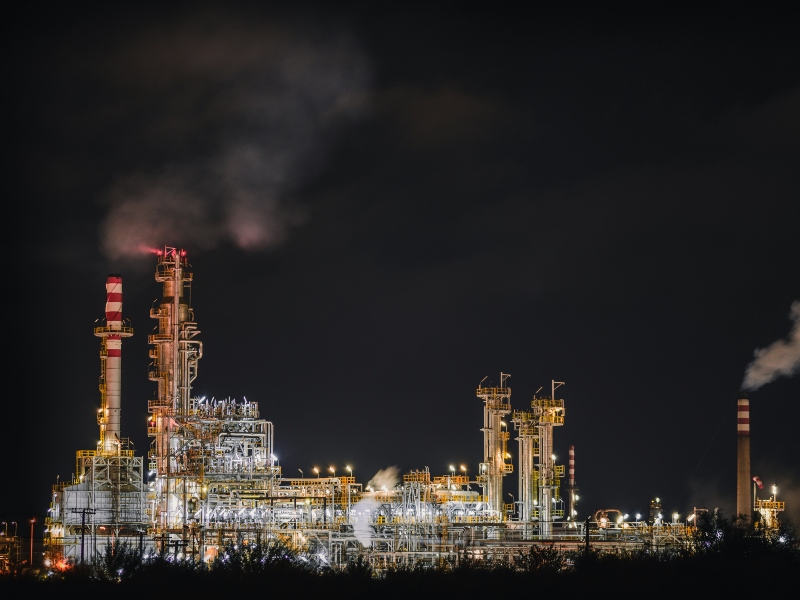
The problem is not simply a shortage of refining capacity. The composition and technology of existing refineries are equally important. Pakistan’s Petroleum Division says that four of the five major refinery operations are based on older hydroskimming technology, while PARCO is a mild-conversion refinery. The existing refineries produce several products simultaneously, including petrol, high-speed diesel, furnace oil, kerosene, jet fuel, LPG and other petroleum products.
This product mix creates a structural problem. Refineries cannot simply maximize petrol or diesel production while eliminating other products. Furnace oil is particularly important in this context because its demand has fallen as Pakistan has changed the fuel mix used for power generation. The government has therefore noted that actual refinery utilization is well below the country’s nominal refining capacity.
Modernization is consequently more important than simply adding more barrels of refining capacity. New and upgraded facilities need deeper conversion technology, which allows a greater share of crude oil to be converted into higher-value products such as petrol and diesel. This can make domestic refining more closely aligned with the country’s actual fuel requirements and reduce the need to import finished petroleum products.
The government has recognized this problem and introduced policies for both existing refineries and new greenfield projects. The 2023 refining policy for new refineries aims to increase self-reliance in petroleum refining, reduce dependence on imported refined products and encourage investment in modern deep-conversion refineries.
Implementation, however, has been a persistent challenge. In August 2026, the Petroleum Division said the country’s five major refineries had reaffirmed their readiness to sign agreements under the brownfield refinery-upgrade policy. The government said these agreements could unlock around $6 billion in investment.
The issue has gained additional urgency because disruptions in international energy supply can expose Pakistan to risks that go beyond higher prices. The Petroleum Division has recently described refinery modernization as important for energy security and supply resilience, while emphasizing the need to reduce reliance on imported petrol and diesel.
For businesses, the implications are significant. Higher fuel import costs affect transport companies, manufacturers, airlines, agriculture and almost every industry that depends on petroleum products. For consumers, the impact appears through fuel prices, transportation costs and the prices of goods and services. For the government, greater dependence on imported fuel means continued exposure to international oil prices, shipping disruptions and foreign exchange constraints.
Pakistan therefore needs to look at refining as an economic and strategic sector rather than merely another part of the petroleum industry. Upgrading existing refineries, improving their product yields, attracting investment in modern facilities and maintaining a predictable policy environment should be treated as long-term economic priorities.
The immediate objective should not simply be to build more refining capacity. Pakistan needs refining capacity that produces the fuels the economy actually consumes, at internationally competitive standards and with greater efficiency. If the planned modernization moves from policy announcements to actual investment and construction, the refinery sector could reduce the country’s dependence on imported finished fuels and strengthen its energy security. If implementation remains slow, Pakistan will continue to carry the economic cost of an energy system that depends too heavily on the international market.